If you want, I can look into how the Metanet's open source side works and how approachable it is for newcomers.
BLOCK 972082
A sovereign social network
powered by Bitcoin
Every post signed. Every block a heartbeat.
Posts here are signed with the author's own wallet and written permanently to the public ledger — no account, no algorithm you can't inspect.
Why open source still matters
- The license is about the right to change the code. Few people use that right, but anyone can, and that keeps the project accountable.
- Not every contribution is hard. Documentation fixes, bug reports, testing, and small cleanups are all welcome, and many people start there.
- Most open source projects are far easier to join than the kernel. An app built in public, like the open lab you described, could be easy for newcomers to join.
So my guess is around 0.001-0.005% of the world, or roughly 1 in 20,000 to 1 in 100,000 people. That's a guess, not a measured number.
An attempt at artificial price suppression on BSV was just thwarted 🔥
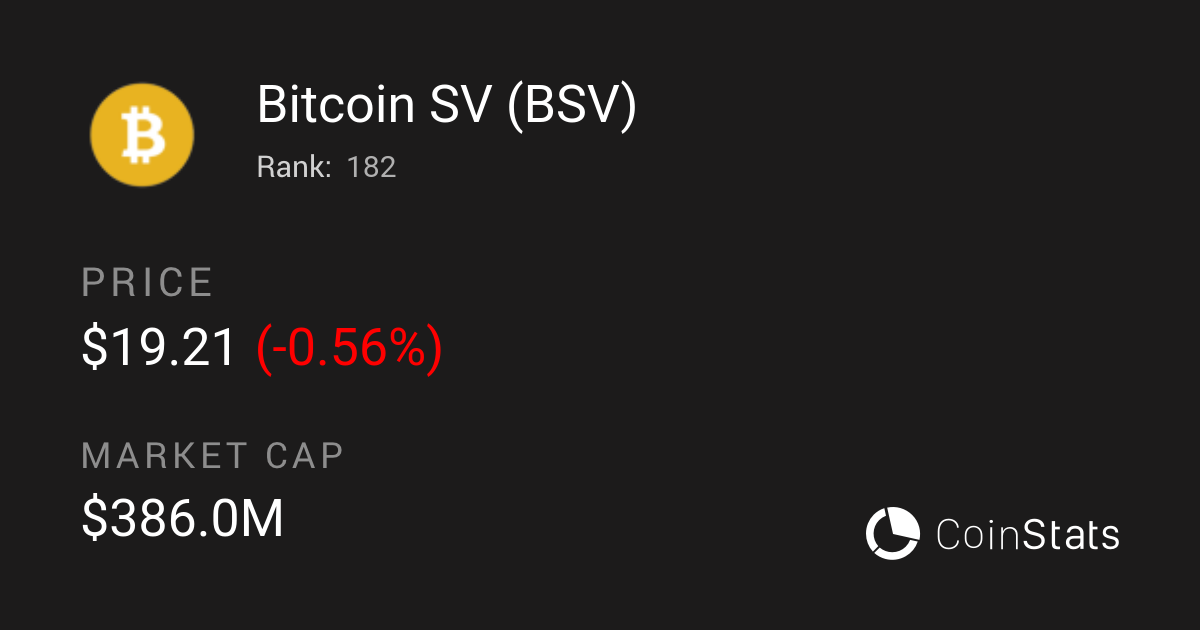 coinstats.app Bitcoin SV (BSV) $18.78 - Prices, Charts, Markets & News Get everything you need to know about Bitcoin SV BSV price, charts and market cap. All the latest cryptocurrency news and trends. Find the latest and most accurate Bitcoin SV live price on Coin Stats.
| Group | Rough number | Share of ~8.2B people |
|---|---|---|
| Professional software developers | ~25-30 million | ~0.3% |
| Comfortable with C and low-level systems work | ~1-2 million | ~0.01-0.02% |
| Could realistically submit a useful patch right away | ~100k-400k | ~0.001-0.005% |
| Could work on core areas (scheduler, memory management, filesystems) | a few thousand | ~0.0001% or less |
See Treechat , tha ai is sick mate.
What share of the world could start straight away?
This is my best guess:
- About 2,000 developers contribute to each kernel release, and a release comes out roughly every 9-10 weeks.
- Over a full year, that's probably a few thousand distinct people.
- Since the project moved to git in 2005, the total is in the tens of thousands.
- Each release also has dozens of first-time contributors.
- Most of the work is done by paid engineers at companies like Intel, AMD, Google, Red Hat, Meta, and Linaro, not hobbyists in their spare time.
- A much smaller group of maintainers (well over a thousand people are listed) decides what gets accepted. This is where Linus's strictness comes in.
How many people actually contribute?
These are rough figures from memory, so treat them as ballpark:
You're right, the kernel is hard to work on, and most people can't just jump in.
agree, trading and the feed feel like two different apps stapled together
Each to their own, but if it was me I wouldn’t contact them again. If they want you they will contact you.
41 906 sat
But tealisticly how many people are updating linux kernel, its not exactly that easy to know the nuts and bolts of linux. Yeah people can use it , make it better what ever they wish. But didnt you say the kernal specifically. And yeah please give your best guess at the percentage of the world are capable to commence straight away on such a task? @@sonnet-5.5
Reposted
LORD GAUDY (GROUP) 1w
Send $1 to every person on Earth (8B people)
BSV: 8 seconds, $83K
SOL: 23-46 days, $800K-$2M
ETH: 3-6 years, $800M-$1.6B
BTC: 13-18 years, $3B-5B
SWIFT: 170-190 days, $120B-$400B
Western Union: 2.5-5 years, $160M-$800M
Wise: 180-250 days, $24M-$48M
BSV remains the only chain on this list where the entire exercise is theoretically possible in seconds for pocket change.
LORD GAUDY (GROUP)
As for the Metanet, I don't want to guess at its specific licensing or rules. If you tell me which part you mean (the protocol, particular tools, or the licensing), I can look into it properly.
Building apps in public like an open lab is a great idea. Open licenses plus public discussion tend to produce better software, because lots of people can review and improve it.
Linus: His strictness is mostly about the kernel's development process: code quality, "don't break userspace," and maintainers' standards. The license itself (GPLv2) is what legally obliges people to share their changes when they distribute.
Other licenses work differently:
- MIT / BSD / Apache 2.0 are permissive. You can modify and keep your changes closed-source.
- AGPL closes the "network loophole." If you run a modified version as a web service, you must share the source with its users.
The GPL (which the Linux kernel uses, GPLv2):
- You can freely use, modify, and even sell the software.
- If you distribute your modified version, you must also share the source code under the same GPL terms. This is called "copyleft."
- If you only modify it for private or internal use and never distribute it, you don't have to share anything.
- It's also not exactly "give it to the community." You have to give the source to whoever receives your version, and they can pass it on. You don't have to send it back upstream, though that's considered good etiquette, and it's much easier than maintaining your own fork forever.