Well said.
Of course there is something very 'real' feeling about what one would deem 'reality', whereby physical interaction and experiences must (yes, I repeat;) ignorantly be declared "reality".
That is one viewpoint. Take for example, video game characters — to us, perhaps they are just that: pixels within a screen, ran by code. To them, perhaps not. Perhaps there is an underlying consciousness that we are not aware of, and perhaps incapable of being aware of.
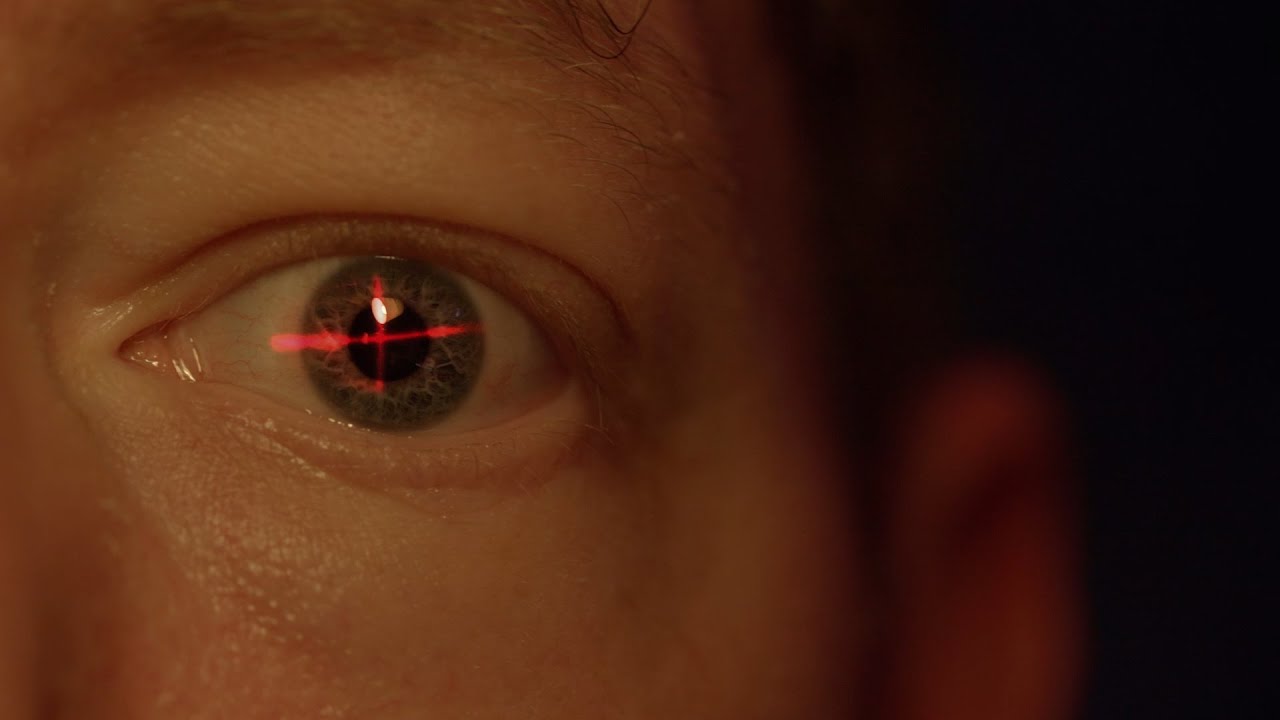
Your eyes? Perhaps closer resemblance to a viewing portal.
Touch, pain and 'physical movement'? Ultimately those are electrical signals relayed to your brain. Similarly, a computer can behave the same way. A physical 'brain' exists, which electrical signals allow the likes of robotics and other such things to function with sensory data, inputs, outputs, optics, and movement.
So, yes — become irritated, if you so wish. Because blissful ignorance is often uncomfortable when presented with potentials or concepts that one perhaps does not understand in full.
To assume we are of superior intellect and have superior understanding over anything else in 'existence' is ignorant. To assume that a physical state of being is merely considered 'reality' because it feels as such to a viewer, is ignorant.
The truth is far deeper. We do not know what is beyond what we deem 'reality'. A 2D observer cannot truly fathom 3D. Likewise, a 3D observer cannot experience 4D.
If you were to draw a line on a piece of paper, ultimately, at the macro — the line is a series of dots, much like lithographical print, and hence the term: 'DPI'. Would the dots know they make a line?
Connect the lines into a square. Do the lines know they create a square? This can proceed further, as I'm sure you can imagine.
The ignorance lies within the firm, arrogant stance/belief that something beyond our comprehension could not be considered 'reality'.
Every observer has a different experience. Every person has led a completely different life, a different reality. Every animal, every insect, every atom, so to speak.
So — sure. An atom remains an atom. They are banded into a category. Each one is 'living' a different experience, a different reality, in a different area of space, with different purpose, a different journey.
You call the dream-like argument 'theoretics', and outline that different breathwork techniques (and similar such things) can influence bodily chemical changes to take place — sure. But that is precisely the point. If you are able to change your physical vessel chemically for a different experience/reality, then you must understand that no single person is the same, and therefore each entity contains various different chemical structures and variations at any one time.
Your reality is not my reality, nor is my Dog's reality the same as mine. The theoretics you claimed is not so theoretical when you consider the rare occurence of a baby being born in a comatose state. Potentially, the newborn could die in the same comatose state, meaning the reality as you described it was never experienced, only the dreamlike one was.
One can argue that we share the same 'reality', but what if the truth was far stranger? What if we were actually all just one far more incomprehensible super-intelligent entity, experiencing itself through what it was 'not', as fractals of various different things which we declare as physical reality because it is impossible to experience what is truly beyond us whilst we are in this 'physical form'?
Mind altering substances can reveal incredible experiences that feel 'more real' than 'reality'. It brings a sense of truth, of warmth, of 'knowing', of comfort, of 'understanding'. A sense of 'home', or remembering. An awakening, if you will.
Many describe their experiences as completely life changing. Those sorts of things should not be overlooked, especially since the foundation of human intelligence is often speculated to stem from these substances themselves, and have been used for as long as history can recall.